When a major fire, flood, storm, or other catastrophic event damages a multifamily or commercial property, recovery can quickly become a large and complex construction project.
Multiple units may be affected. Structural components can be compromised. Electrical, plumbing, and mechanical systems may require extensive repairs. Residents or tenants may be displaced while property teams work to understand the full extent of the damage.
At this scale, disaster restoration requires much more than repairing what is immediately visible.
Large loss restoration demands construction expertise, experienced project management, access to skilled trades, and the ability to coordinate many phases of work toward one objective: rebuilding the property safely, efficiently, and with lasting quality.
For owners and operators facing significant property damage, those capabilities can make all the difference in what happens next.
Large Property Losses Remain a Major Concern in 2026
The first half of 2026 has already demonstrated how quickly catastrophic events can create significant property losses.
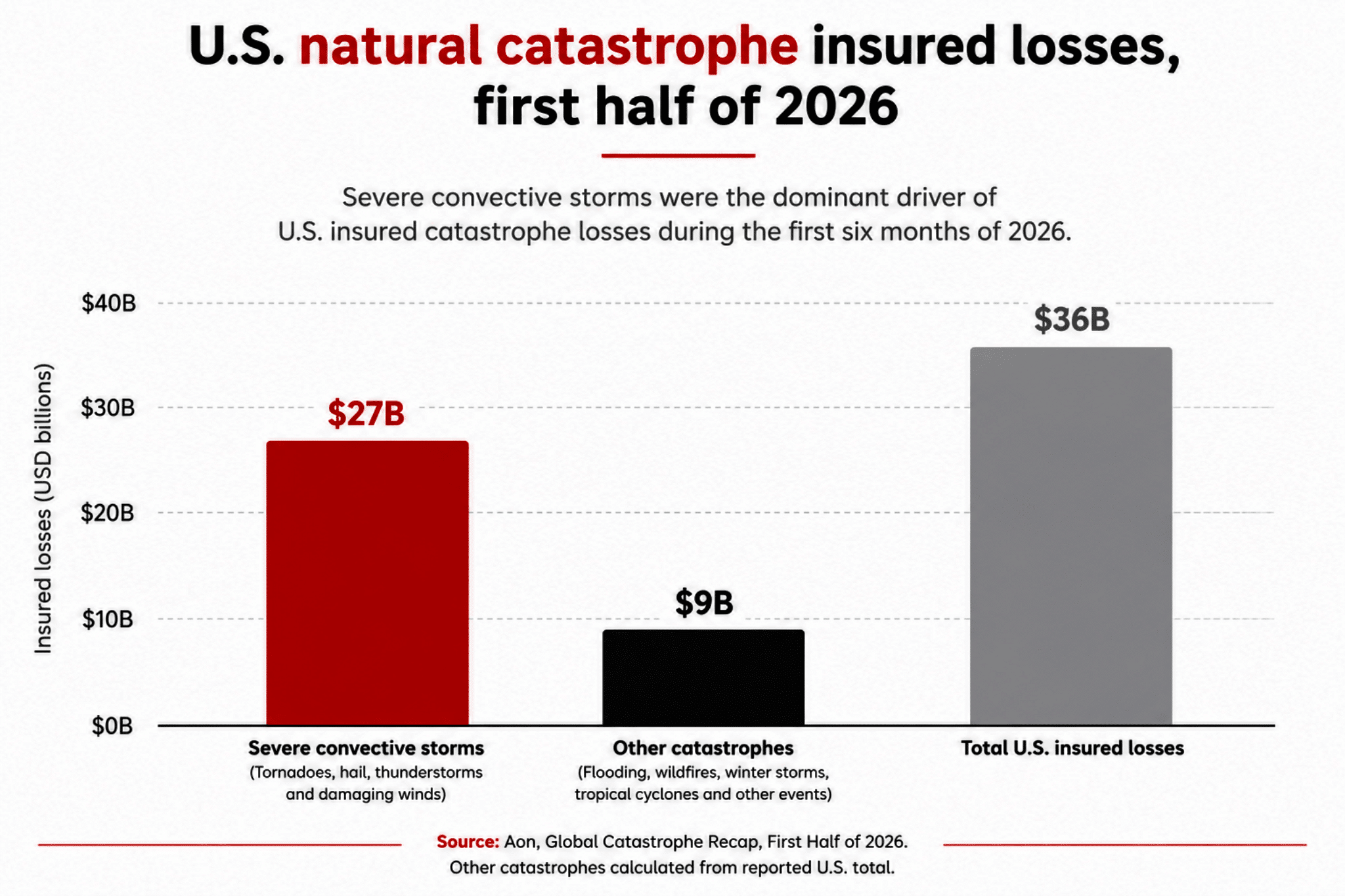
According to Aon’s Global Catastrophe Recap: First Half of 2026, natural catastrophes generated approximately $36 billion in insured losses in the United States during the first six months of the year.
The United States accounted for approximately 75% of global insured catastrophe losses during that period. It also experienced 11 separate events that each caused at least $1 billion in insured losses.
Severe convective storms were major drivers. Tornadoes, hail, thunderstorms, and damaging winds generated approximately $27 billion in U.S. insured losses during the first half of 2026.
For multifamily and commercial property owners, these numbers reinforce an important reality. A major property loss can quickly become much more than a repair project.
It can become a full rebuilding effort.
What Makes Large Loss Disaster Restoration Different?
Not every restoration project carries the same level of complexity.
A localized event may affect one room or a limited section of a building. A large loss can involve multiple units, entire floors, common areas, roofs, structural systems, utilities, and interior spaces at the same time.
The challenge is not simply the amount of damage.
It is the number of interconnected decisions required to be rebuilt.
Structural repairs may need to happen before electrical or plumbing work can move forward. Building systems may need to be restored before walls can be closed. Interior reconstruction cannot begin until the structure and systems behind those finishes are ready.
Every phase affects the next.
That is why large loss of disaster restoration requires experienced coordination from the beginning.
The First Step Is Understanding the Full Scope
Before rebuilding can begin, restoration teams need a clear understanding of the damage.
Visible conditions only tell part of the story.
Water can move through walls, flooring, ceilings, and insulation. Fire can affect framing, electrical components, and surrounding spaces beyond the immediate burn area. Severe storms can damage roofing and exterior materials while allowing water to enter interior areas.
A detailed damage assessment helps establish the scope of the restoration project.
Teams need to determine which materials require removal, which structural components need repair, which building systems have been affected, and how the different phases of reconstruction should be sequenced.
On a large property, that level of planning becomes especially important.
Demolition Creates the Path to Reconstruction
After the scope of damage is understood, damaged or unsafe materials may need to be removed.
Demolition and debris removal prepare affected areas for reconstruction.
On a large loss project, this work needs to support the broader rebuilding plan. The objective is to remove materials that cannot remain while preserving components and areas that can be restored.
Once damaged materials are removed, restoration teams can access framing, utilities, and other building components that may require repair.
At this point, the project is no longer simply addressing the aftermath of a disaster.
It is about rebuilding the property.
Structural Reconstruction Is the Foundation of Recovery
Walls, flooring, and finishes may be the most visible parts of a completed restoration, but the quality of the rebuild depends on what is behind them.
Large property losses can affect framing, roofing, foundations, electrical infrastructure, plumbing, HVAC systems, and other critical components.
These systems need to be properly evaluated and restored before interior spaces can be completed.
Renu brings construction expertise directly into the disaster restoration process.
Our teams manage structural reconstruction and coordinate mechanical, electrical, and plumbing repairs as part of the larger rebuilding plan.
For owners, this means the project can be approached as one connected restoration rather than a collection of unrelated repairs.
Large Loss Restoration Requires Strong Project Management
The larger the property loss, the more moving parts there are to manage.
Property managers need schedules and progress updates. Ownership needs visibility into the project. Residents or tenants may need information about affected areas. Insurance representatives may require documentation. Multiple construction trades need access to the right areas at the right time.
Without experienced coordination, those moving parts can create delays and confusion.
This is where project leadership becomes an essential part of disaster restoration.
Renu coordinates the different phases of reconstruction so work can move forward in a logical sequence. Communication remains part of the process, giving stakeholders greater visibility into progress and what comes next.
For multifamily properties, this becomes especially important when rebuilding is taking place while other areas of the community remain operational.
Rising Construction Costs Add Another Layer of Complexity
Large loss restoration is also affected by conditions beyond the original disaster.
In April 2026, the Insurance Information Institute reported that escalating labor and construction costs are among the factors contributing to growth in insured losses in the United States.
That matters when a large property requires extensive reconstruction.
Delays, poor coordination, duplicated work, and changes in scope can become increasingly costly when labor and construction expenses are already under pressure.
Experienced planning and project management therefore have a direct role in keeping a complex rebuild organized.
For Renu, restoration is not simply about completing individual construction tasks. It is about coordinating those tasks around the needs of the entire property.
Interior Reconstruction Brings the Property Back to Use
Once structural components and major building systems have been addressed, interior reconstruction can move forward.
Drywall, insulation, flooring, painting, fixtures, and finishes begin transforming damaged areas back into functional spaces.
For multifamily communities, that means rebuilding several apartments and common areas residents depend on.
For commercial properties, it means restoring spaces where tenants and businesses can operate again.
These finishing stages play an important role in disaster restoration, but their success depends on completing the underlying work correctly.
Renu manages interior restoration as part of the larger reconstruction process, maintaining continuity from major structural work through final finishes.
Why a Single Source Restoration Partner Matters
Large loss projects can involve many different construction disciplines.
When property owners must coordinate separate contractors for demolition, structural reconstruction, roofing, electrical work, plumbing, HVAC, and interior finishes, the recovery process can become even more complicated.
Renu provides a more connected approach.
As a leading property restoration company serving multifamily and commercial properties, Renu brings restoration expertise, construction capabilities, skilled trades, and experienced project management together through one team.
From damage assessment and demolition through structural reconstruction and interior rebuilding, our focus remains on the complete recovery of the property.
That single source approach creates greater continuity and gives owners a clearer line of responsibility throughout the project.
Built for Large Loss Disaster Restoration
The first half of 2026 has already shown that major property losses remain a serious challenge across the United States.
For property owners, the question is not only how quickly restoration teams can address the damage.
It is who has the resources and construction expertise to rebuild when the scope becomes significant.
Renu provides full rebuilding and property restoration services for multifamily and commercial properties affected by fire, water, storms, mold, and other catastrophic events.
Our teams understand that large loss disaster restoration requires careful assessment, construction expertise, strong coordination, and the ability to manage a complex project through completion.
When major property damage becomes a major rebuilding project, Renu is built to take it on.
#DisasterRestoration #LargeLossRestoration #PropertyRestoration #DisasterRecovery #PropertyReconstruction