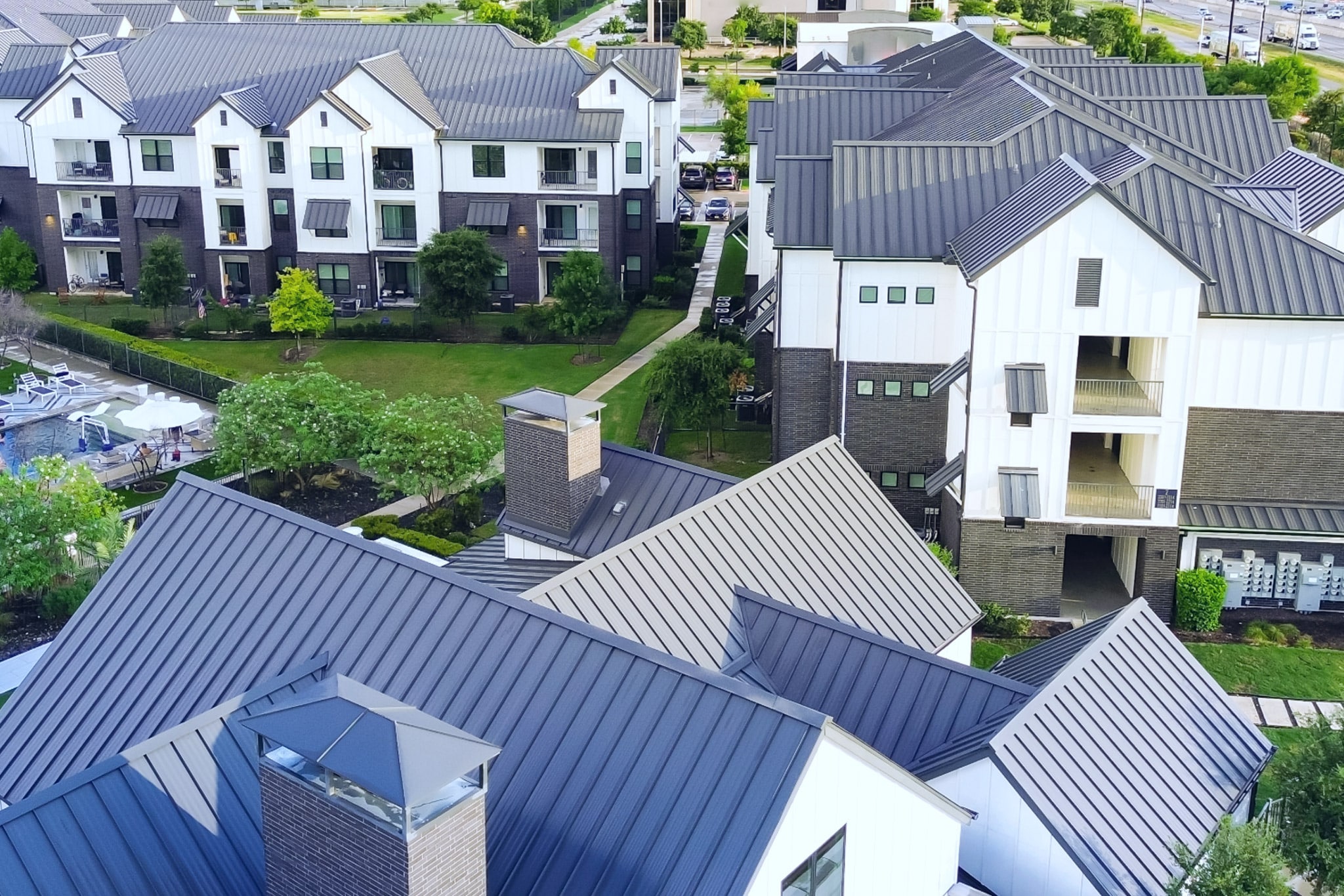
Multifamily roof issues often receive less attention than unit interiors, amenity upgrades, or curb appeal during capital planning. However, overlooking the roof can have costly consequences. A failing roof does not only create a maintenance headache, but it threatens occupied units, disrupts residents, complicates insurance claims, and leads to repair expenses that can wipe out months of net operating income after a single storm or leak. Whether you own a garden-style apartment community, a mid-rise, or a high-rise property, your roof works around the clock to protect everything beneath it. As one of your property’s most valuable assets, it deserves proactive maintenance and timely repairs to maximize its performance and lifespan.
Table of Contents
ToggleWhy Roof Maintenance Is a NOI Issue, Not Just a Maintenance Issue
Property managers and maintenance teams are usually the first to catch apartment roof problems. But without a clear escalation path and quick action, those observations get lost in a work order queue until the damage is undeniable. For owners and investors, deferred roof maintenance carries a compounding cost. A minor repair ignored for one season becomes a system-level failure by the next. And when a roof reaches emergency status in the middle of winter or during peak leasing season, your options narrow and your costs spike. Roof maintenance and repair are essential for asset protection. Partnering with an experienced multifamily roofing contractor helps identify issues early, prioritize repairs, and prevent costly disruptions.
5 Critical Roof Issues Multifamily Property Owners Should Never Ignore
- Active Leaks That Have Been Patched but Never Properly Repaired
A temporary patch is not a repair. It is a delay. In multifamily buildings, water infiltration travels well beyond the visible entry point before it surfaces, through insulation cavities, down structural members, and across floor assemblies until it shows up as a stain in a unit two floors below the actual problem. By the time a resident reports a leak, the damage has already compounded. You are now looking at drywall replacement, potential mold remediation, flooring repairs, all from a minor crack that could have been addressed for a fraction of that cost. - Deteriorating Roof Membrane
Most multifamily buildings in the United States carry flat or low-slope roofs covered with single-ply membranes, TPO, EPDM, or modified bitumen. These systems perform well, but they have a finite lifespan, and they degrade quietly. Regular inspection is a must. UV exposure breaks down the surface. Foot traffic from HVAC and maintenance crews creates stress points and punctures. By the time membrane deterioration becomes visible, it is typically already allowing water in. This requires major roof leak repair in apartments and commercial properties. - Flashing Failures at Critical Transition Points
Flashing is the sheet metal detailing at every vulnerable connection on your roof, parapet walls, HVAC curbs, drain collars, chimneys, and vertical penetrations. When it is installed and maintained correctly, it is invisible. When it fails, it causes leaks at your property. The entry point of leakage and the visible damage rarely match, making multifamily and commercial roof repair challenging.
Why Proactive Roof Maintenance Matters
- Ponding Water on Flat Roof Surfaces
Standing water that remains on a flat roof more than 48 hours after a rain event is a drainage failure, not a weather quirk. Ponding accelerates membrane breakdown, adds continuous structural load to your roof deck, and creates conditions for biological growth that further compromise surface materials. Over time, deck deflection from ponding load makes drainage progressively worse, a cycle that ends in structural repair, not just membrane replacement. - Neglected Drain and Gutter Systems
Clogged or damaged drainage is one of the most preventable sources of roofing damage in multifamily properties, and one of the most commonly overlooked. Drains and gutters do not just manage rainfall. They protect your foundation, your membrane edges, and your building envelope from sustained moisture exposure. Blocked drains back water up against membrane seams and flashing details. Overflowing gutters push water against siding and into soffit assemblies.
It is essential to learn, through regular inspection, when to replace a multifamily roof.
Why Multifamily Owners Trust Renu for Roofing
At Renu, we do more than inspect the surface of your roof. Our experts evaluate drainage performance, flashing integrity, membrane condition, roof penetrations, and how the roofing system integrates with the entire building envelope. We document every finding, prioritize issues based on risk, and provide property owners and management teams with a clear, actionable roadmap for immediate repairs and long-term capital planning.
Give your property the protection it deserves. Book a comprehensive multifamily roof evaluation with Renu today and gain the insights you need to reduce risk, extend your roof’s lifespan, and protect your investment for years to come.
#MultifamilyRoofs #MultifamilyRenovation #ApartmentRoofProblems #MultifamilyRoofRepair #Dallas #Denver #Austin #RoofRepair #RoofRenovations #MultifamilyRoofingContractors