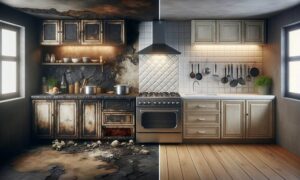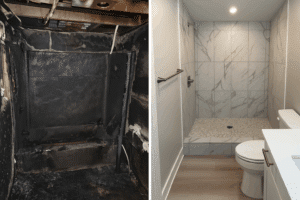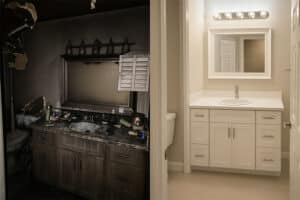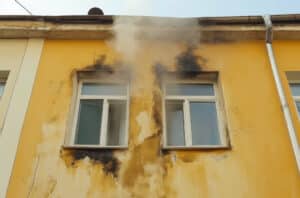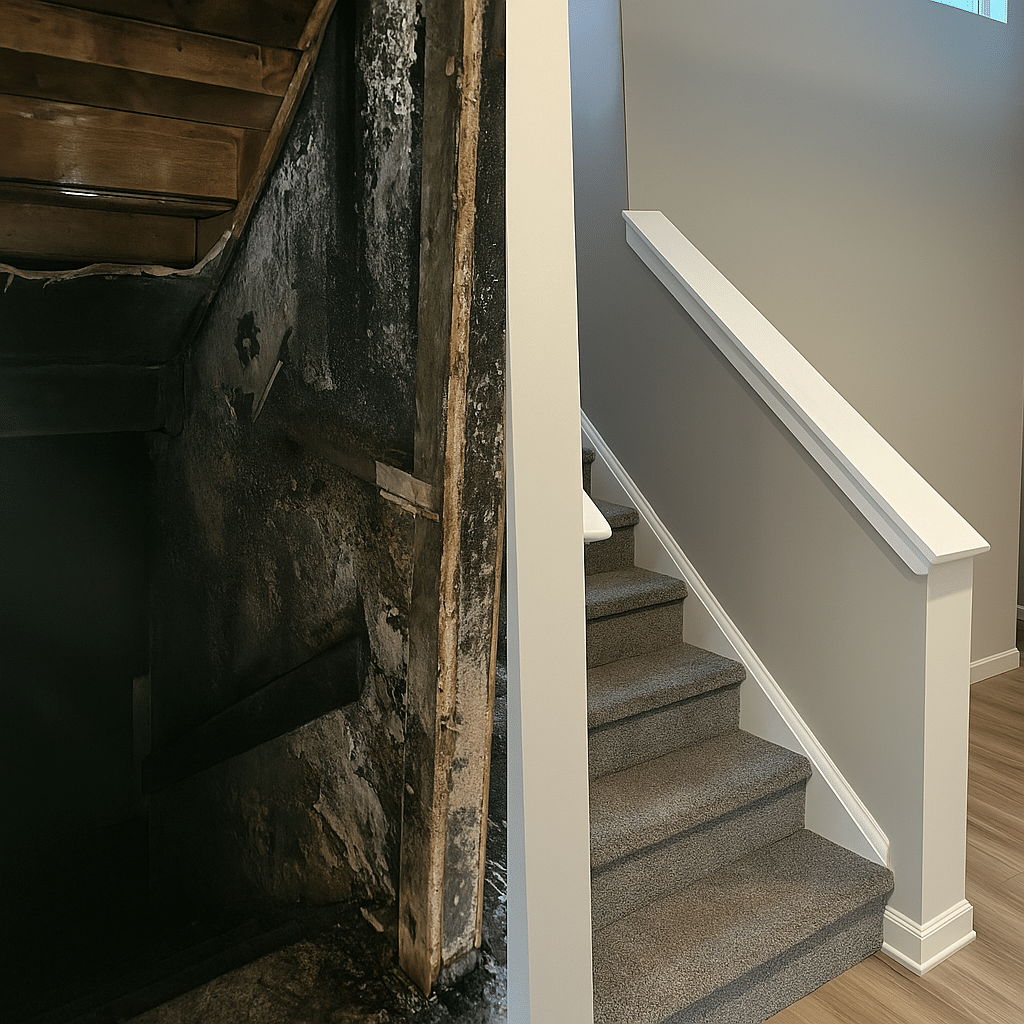
Smoke and soot damage often appear manageable at first glance. A few dark streaks on the wall. A lingering odor in the air. Some residues on ceilings, cabinets, or flooring. Many homeowners assume it is a surface-level issue that can be handled with basic cleaning.
However, from a restoration contractor’s perspective, this is rarely the case.
Soot and smoke cleanup is one of the most technically complex forms of restoration work. What is visible is only part of the problem. What is hidden behind walls, inside HVAC systems, and within porous materials can continue causing damage long after the fire is extinguished.
In fact, we see it often. Cleanup starts too late. Or it starts with the wrong approach. Odors return. Stains bleed through fresh paint. Materials deteriorate prematurely. Understanding how smoke and soot behave from the beginning is critical to a full recovery.
Table of Contents
ToggleThe First 24 Hours Set the Direction of Recovery
The first day after a fire has an outsized impact on the outcome. Smoke residue begins changing chemically almost immediately.
In humid environments, this process accelerates. Moisture in the air allows soot to bond more aggressively to surfaces. Over time, soot becomes increasingly acidic, leading to corrosion, permanent staining, and material breakdown.
Instead, Early actions should focus on stabilization, not aggressive cleaning.
What helps in the first 24 hours
- Ventilating the space if it is safe to do so
- Shutting down HVAC systems to prevent soot from spreading through ductwork
- Using HEPA-grade air filtration if available
- Contacting a professional restoration contractor early
What often causes more damage
- Wiping or scrubbing soot-covered surfaces
- Using household vacuums that spread fine particles
- Washing painted walls or fabrics without guidance
Well intentioned cleaning can smear soot, embed odors deeper, and permanently damage finishes.
Types of Soot and Smoke Damage
One of the most common misconceptions is that soot is just dirt. However, in reality, different fires create very different residues, and each requires a specific treatment approach.
- Dry smoke
- Comes from fast-burning, high-temperature fires involving wood or paper
- Leaves a fine powder that spreads easily into cracks and cavities
- Appears easier to clean, but penetrates deeply and often leaves lingering odors
- Wet smoke
- Results from low-temperature fires involving plastics, rubber, or synthetic materials
- Produces thick, sticky, oily residue that smears when touched
- Bonds aggressively to surfaces and is far more difficult to remove
- Protein residue
- Common in kitchen fires
- May not leave visible soot, but creates strong odors and discoloration over time
Identifying what burned matters. Using the wrong cleaning, soot, and smoke removal technique can permanently damage materials and finishes.
Hazards of Smoke and Soot Damage
More importantly, smoke damage is not just an appearance issue—it is also a health concern.
Because soot particles are microscopic, they can easily spread throughout a property and contain chemical compounds released from plastics, treated wood, fuels, adhesives, and other household materials. As a result, exposure may lead to:
- Eye, skin, and lung irritation
- Worsening of asthma or respiratory conditions
- Long-term cardiovascular and cancer-related risks
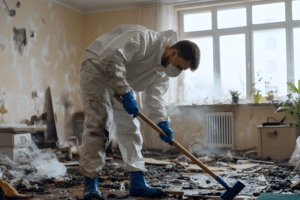
This is why professional crews use protective equipment, controlled containment, and industrial filtration. Attempting smoke damage cleanup without protection often spreads contamination and increases exposure risks.
Why Smoke Odors Persist for Weeks or Months
One of the most frustrating issues homeowners faces are lingering smoke odor long after visible cleanup.
This happens because smoke embeds itself into porous materials such as:
- Drywall and framing
- Carpet and padding
- Insulation and upholstery
- Subfloors and structural wood
Unfortunately, opening windows or using air fresheners only masks the problem temporarily.
To achieve lasting results, professional soot and smoke removal relies on specialized tools that neutralize odors at the molecular level, including:
- Thermal fogging
- Ozone or hydroxyl treatments
- Industrial air scrubbers with HEPA filtration
If, after basic cleaning, odors return, it usually means smoke contamination remains hidden.
In many cases, not all smoke damage shows up right away.
We frequently inspect homes where walls were cleaned and repainted, only for:
- Yellow or brown stains are to reappear
- Odors to return
- Paint to bubble or peel
These are signs of deeper smoke penetration that was never fully addressed.
Therefore, professional assessments go beyond visible surfaces. Rather than focusing solely on what can be seen, technicians thoroughly inspect wall cavities, insulation, ductwork, and other concealed spaces. As a result, they can identify the full extent of the damage and ensure it is addressed correctly the first time.
Why Professional Restoration Matters
Ultimately, Smoke and soot removal services are not routine cleaning. It is a controlled restoration process that requires experience, specialized equipment, and technical judgment.
Handled properly, it:
- Protects occupant health
- Preserves building materials
- Restores indoor air quality
- Prevents repeat repairs and escalating costs
When homeowners involve Renu, a fire damage restoration company, early in the recovery process, we help contain the damage, accelerate restoration, and prevent costly long-term issues. Talk with our fire damage restoration specialists to create a recovery plan that protects your home, restores it safely, and helps your family move forward with confidence.
#FireDamageRestoration #FireDamageRestorationCompany #SmokeDamageCleanup #Phoenix #SootCleanup #FireDamageRepair #RestorationSpecialists #SmokeRemoval #LasVegas #SootRemovalServices #Dallas